
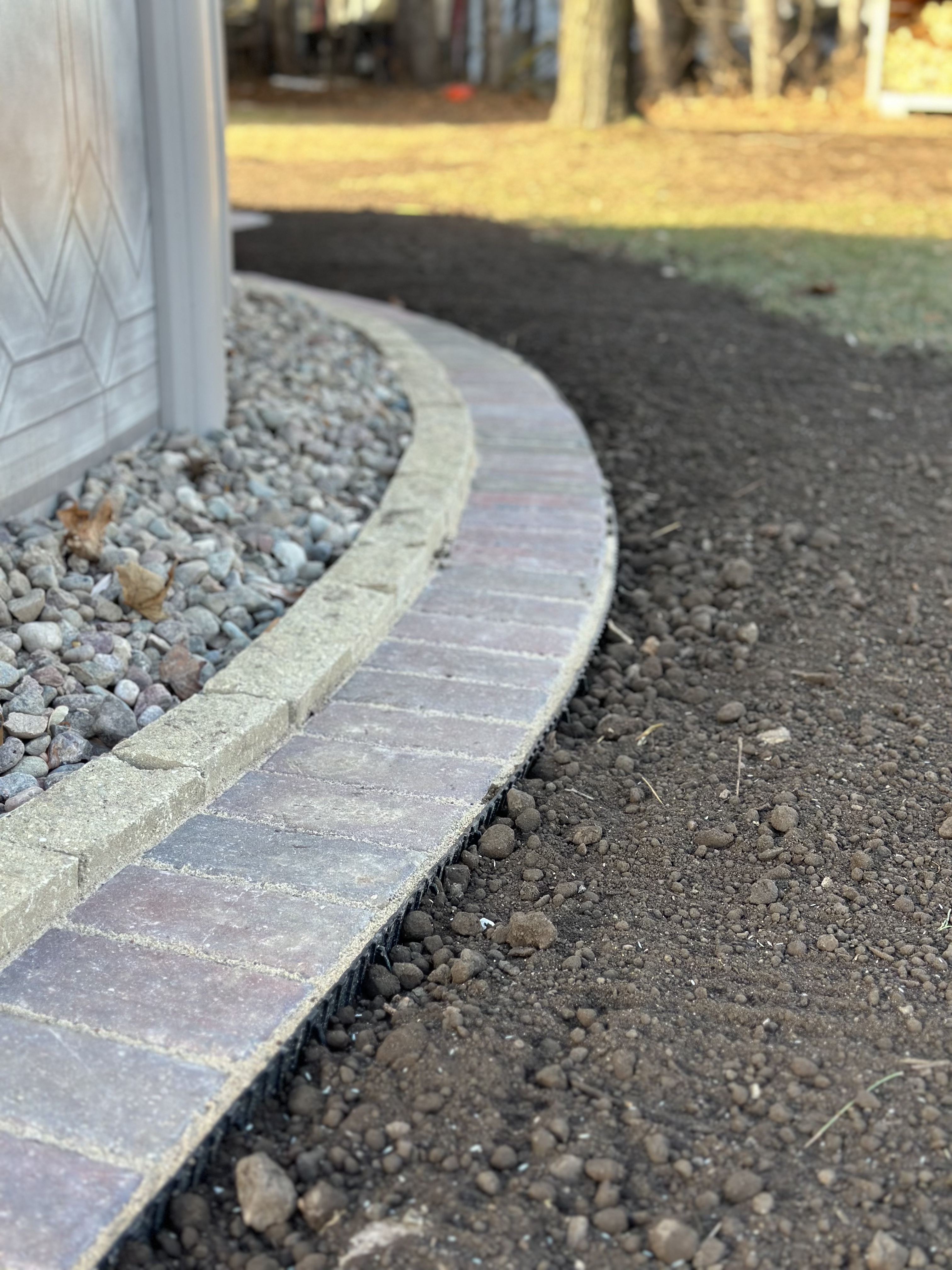
Some outdoor upgrades are large and structural, while others are the details that make the entire property feel more intentional. Landscape edging falls into that second category. On your Precision site, edging is one of the core service pages because it gives beds, lawns, and material areas a cleaner definition.
Around Crivitz, edging work is often paired with small grading corrections or drainage-aware finish work because many yards need more than a visual border. They need a cleaner way to hold materials in place and direct water away from problem spots.
What this service helps improve
- Bed edges that feel soft, uneven, or hard to maintain
- Transitions between lawn, mulch, stone, and hardscape
- Low spots or runoff patterns that make the yard feel messy
- Finish work around patios, walls, and new lawn projects
Why edging matters more than people expect
Edge definition changes how the whole landscape reads. It gives the eye a clean line to follow, helps materials stay where they belong, and makes lawns and beds look more deliberate. It is often one of the last things homeowners notice in a finished space, but one of the first things that makes the space feel polished.
How drainage fits in
If a yard has soggy spots, washouts, or awkward water movement, it usually makes sense to account for that while the finish work is happening. Even small grade corrections can protect the look and lifespan of the larger project. When edging and drainage planning happen together, the result is both cleaner visually and more reliable over time.