
A lot of outdoor projects struggle because the drainage issue was present before the visible work ever started. If you are searching for a landscape drainage contractor in Crivitz, WI, there is a good chance you are already seeing the symptoms: wet areas that never dry, erosion on a slope, mulch or gravel that keeps moving, or a lawn that stays soft and uneven after rain.
These problems are worth solving early because drainage affects almost everything else in the landscape. Patios, retaining walls, lawn installation, and decorative bed work all perform better when water movement has been accounted for first.
Bad drainage often shows up in more than one part of the yard.
Water rarely causes problems in only one exact spot. A wet area near the house may be connected to a grade issue farther out in the yard. A washout near a slope may affect the lawn below it. That is why drainage planning usually works best when the contractor looks at the broader property instead of just the puddle or low spot that is easiest to see.
In the Crivitz area, properties with elevation changes or seasonal water movement often need a mix of grading, runoff control, and supporting landscape work to really improve the problem.
Drainage planning protects future hardscape and lawn projects.
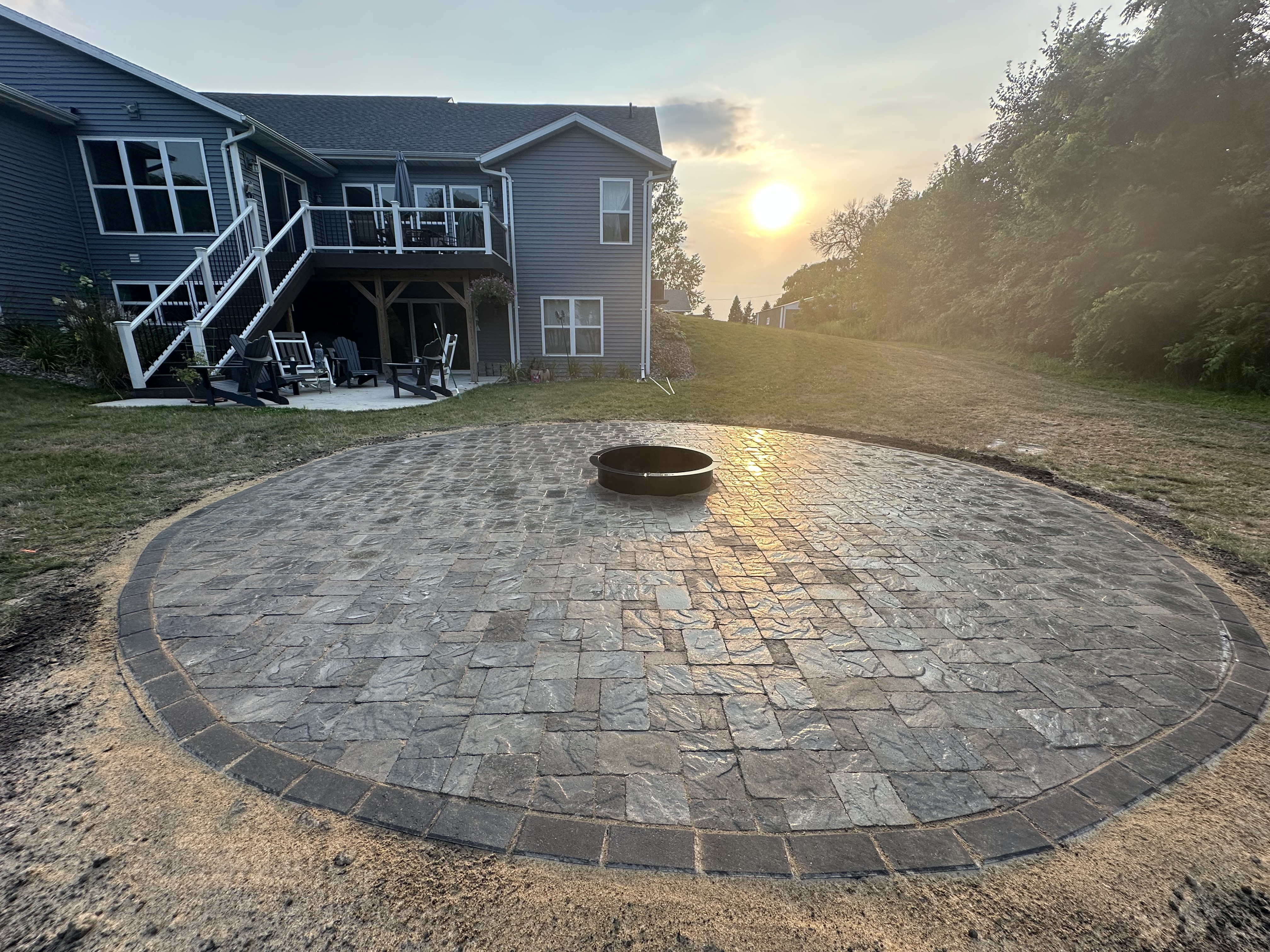
One of the best reasons to fix drainage early is that it helps protect the investments that come afterward. A patio needs stable ground and controlled runoff. A retaining wall needs thoughtful water management. A lawn installation needs a surface that will not stay saturated or wash away.
Even when drainage is not the main reason a homeowner reaches out, it often becomes part of the project discussion because it helps the finished space last longer and feel more dependable.
The best drainage solutions still need to look intentional.
Homeowners want a yard that works better, but they also want it to look better. Good drainage corrections should support the visual quality of the property instead of leaving behind something that feels purely utilitarian. That may mean pairing grading changes with lawn restoration, edging, bed cleanup, or structural elements that organize the space more clearly.
The goal is not just to move water. It is to improve the way the entire property feels and functions once the problem area has been corrected.
If the yard stays wet, treat it as a project priority.
Drainage issues usually do not get better on their own. If water is repeatedly affecting usability, appearance, or other outdoor features, it makes sense to address that first or at least fold it into the wider project plan. That approach gives every other improvement a stronger base to succeed on.